

Homily: Spiritual Sight And Spiritual Blindness
By Rev. Peter Paul Mary Amponsah-Poku
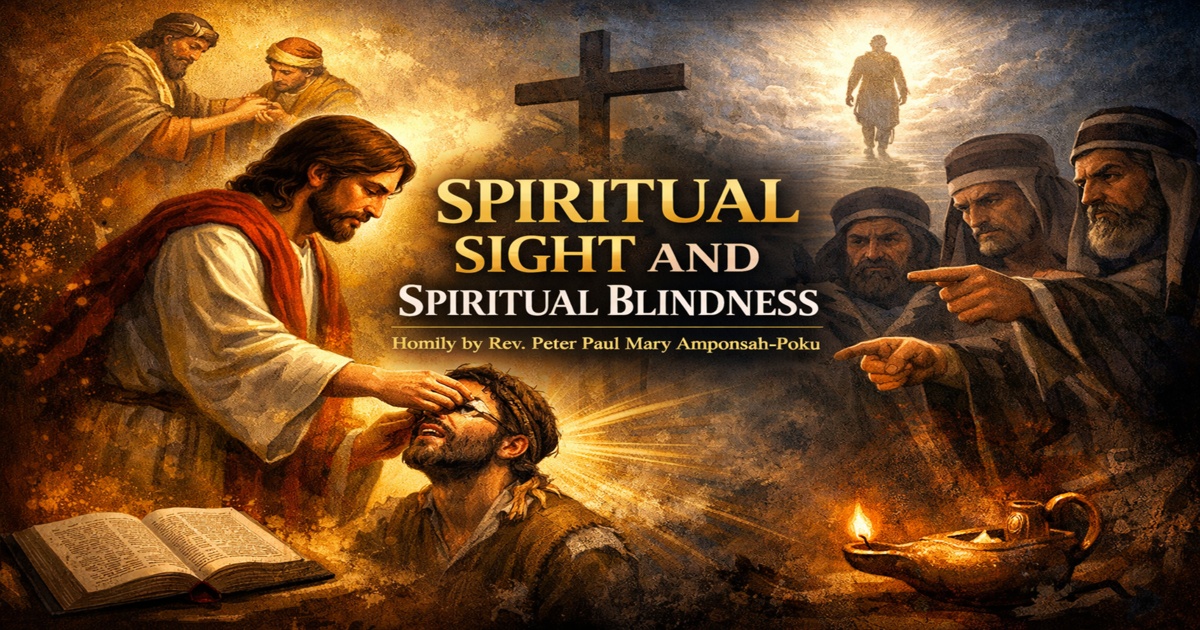
Dear brothers and sisters in Christ, today is the Fourth Sunday of Lent and the readings of invite us to reflect on a very important theme in the Christian life: spiritual sight and spiritual blindness. The Gospel presents the healing of the man born blind, but the deeper message of the story is not only about physical sight. Rather, it shows how Christ exposes the spiritual blindness of those who think they see, while giving true sight to the one who was blind.
One thing that causes spiritual blindness is when one forgets about the power of and glory of God and begins to shift blames and point accusing fingers. The Gospel begins with a question from the disciples. When they saw the blind man, they ask Jesus: “Rabbi, who sinned, this man or his parents, that he was born blind?” The disciples assume that suffering must be the result of personal sin. In their minds, they already understood how God works.
However, Jesus corrected them saying that neither the man nor his parents sinned; instead, his condition will reveal the works of God. God expects us to offer our predicaments and troubles to him to glorify himself rather than looking around to grumble about who has caused this trouble to me or on past event which cannot be reached us anymore.
Beloved in Christ, One priest shared his story about the first time he heard a voice from the Most Blessed Sacrament when his ordination was suspended for an investigation on him due to false accusations. And it said “I have no hand in this but if you offer it to me, I will glorify myself with it”. That immediately took away his sorrow and never complained and he gives testimony on how God is wonderfully glorifying himself in his ministry. Nobody knows the trials you are going through, do not let it blind you, offer it to God for his glorification.
Dear People of God, the next cause of spiritual blindness is the making of wrong assumptions. The disciples thought they understand the situation, but their understanding was limited. Jesus teaches them that God can work through situations that humans do not fully understand. Sometimes what appears to be a problem or a tragedy can become an opportunity for God’s glory to be revealed. We should be careful about how we judge others in their predicament and do away with here says and rumors.
This lesson also connects with the first reading. When the prophet Samuel was sent to anoint a king, he thought Eliab was the chosen one because of his appearance. But God corrected him, saying: “Not as man sees does God see, because man sees the appearance, but the Lord looks at the heart.” Human vision is often limited, but God sees more deeply. You may not The Gospel then introduces the second group of characters: the parents of the blind man. When the Pharisees question them, they confirm that the man is their son and that he was born blind. However, they avoid saying more and tell the authorities to ask their son directly. The Gospel explains that they answered this way because they were afraid of being expelled from the synagogue.
Beloved in Christ, this reveals another form of blindness: the blindness caused by fear. The parents can see that something extraordinary has happened, yet fear prevents them from speaking openly about it. Fear can sometimes prevent people from standing for the truth or from openly acknowledging God’s work. As future priests though we have to be careful when people present their problems before us for help, we have to also trust in the power of God.
Dear Friends, the most striking example of spiritual blindness is to be too legalistic and besotted with our personal principles which appears in the Pharisees. They investigated the miracle but refuse to accept it. Instead of rejoicing that a man who was born blind can now see, they focus on the fact that Jesus healed him on the Sabbath. Because of their rigid interpretation of the law, they concluded that Jesus cannot be from God.
Their reaction shows the blindness of pride and stubbornness. The Pharisees believed they already possess the truth, so they are unwilling to consider the possibility that God may be acting in a way they did not expect. Even when confronted with a clear miracle, they refused to believe. In the first reading, Samuel used anointing oil to anoint David but the Gospel says Jesus used clay of the spittle to heal the man. Dear People of God, nobody can have an absolute knowledge about God’s ways. Don’t we sometimes condemn people during the assumption of the Blessed Virgin Mary when they pick up flowers and leaves thrown on her carried statue for their personal use? Yet they come back with thanksgiving and testimonies of miracles.
Another cause of spiritual blindness is seeing another person as unqualified to be used by God to guide us to the truth. The Pharisees were so inexorable and eristic that they saw the blind man to be a sinner to advise them and were just arguing with him irrespective of their contradictions being exposed. Dear brothers, we should accept corrections now that in the future, we may be able to accept corrections from our parish council and anyone whom life presents to us. On the social media people were praising catholic priests about how intelligent they are but others commented that some do not feel comfortable when other intelligent people are around them and even get angry when corrected.
Beloved in Christ, in contrast to the above, the blind man gradually grows in understanding and seeing the truth. At first, he simply refers to “the man called Jesus.” Later he calls Him “a prophet.” Finally, when Jesus meets him again, the man professes his faith and says, “Lord, I believe,” and he worships Him. The one who was physically blind gradually gains spiritual sight, while those who claim to see remain in darkness.
This is why Jesus concludes with these powerful words: “I came into this world for judgement, so that those who do not see might see, and those who do see might become blind.” Those who humbly recognize their need for God receive light. But those who believe they already know everything can close themselves to the truth. Saint Paul reminds us in the second reading: “You were once darkness, but now you are light in the Lord.” The Christian life is a journey from darkness to light, from blindness to true vision.
For us, especially in a seminary setting, this Gospel carries an important message. Knowledge, study, and religious training are important, but they do not automatically guarantee spiritual sight. Like the Pharisees, it is possible to know many things about God yet still fail to recognize His action.
Therefore, we must always approach Christ with humility. We must constantly ask Him to open our eyes so that we may see as He sees. God sometimes uses unexpected people or extraordinary situations to reveal His truth and to challenge our limited understanding.


Leave a Reply