

Introduction
Although relatable in many ways, like the legal calendar, the Church’s calendar is generally independent of the Gregorian (solar) calendar. While the Gregorian calendar begins on 1st January and ends on 31st December, the liturgical calendar, with a somewhat inconsistent date, begins on the first Sunday of Advent and ends on the Saturday after the solemnity of Christ the King. Distinctively, therefore, the Church’s way of life is not dictated by the Gregorian calendar.
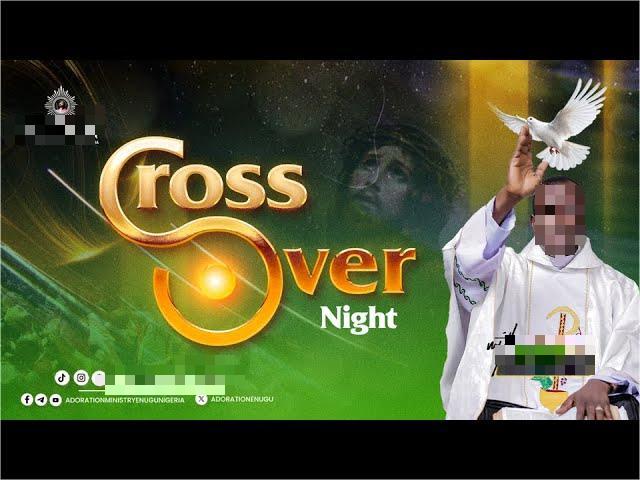
It must be said, however, that although the Church is not of the world, we are in the world amidst all its graces and challenges (cf. Jn. 17:15-17). In ecclesiastical jurisdictions like Ghana, one such challenge to the fulfillment of our religious duties is the existing tension between January 1st (a solemn day of obligation to celebrate the Theotokos—Mother of God) of the Church’s calendar and the ‘31st December Crossover,’ which is propagated to transition an old Gregorian year into a new year of that same calendar. Due to its widespread effects even on the Church in Ghana, it is easily lost on some faithful that although part of the Christmas octave, there is no proper liturgy for the so-called ‘31st December Crossover’ except the liturgical vigil of Mary, Mother of God.
But in both theory and practice, as precepts of the Church, Catholics are charitably bound to acknowledge ‘Sunday, on which by apostolic tradition the paschal mystery is celebrated, must be observed in the universal Church as the primordial holy day of obligation. The following days must also be observed: the Nativity of our Lord Jesus Christ, the Epiphany, the Ascension, the Body and Blood of Christ, Holy Mary the mother of God, her Immaculate Conception, her Assumption, Saint Joseph, Saint Peter and Saint Paul the Apostles, and All Saints’ (CIC Can. 1246 §1; CCC 2185).
To ensure the virtue of religion, which is recognized as justice toward God (CCC 1807), the precepts of the Church are set in the context of a moral life bound to and nourished by liturgical life. The obligatory character of these positive laws decreed by the pastoral authorities is meant to guarantee to the faithful the indispensable minimum in the spirit of prayer and moral effort, in the growth in love of God and neighbor (CCC 2041). Hence, by the fact of filial obedience and as the fourth precept, Catholics are expected to participate in the principal liturgical feasts, which honor the mysteries of the Lord, the Virgin Mary, and the saints (CCC 2043; CIC Can. 1247).
However, regarding the topic at hand, the weight of the breezy vogue ‘31st December Crossover’ culture on the ordinary Catholic, especially as against fulfilling the obligatory character of the solemnity of Mary Mother of God (Θεοτόκος / Theotokos) is heavily felt. Indeed, for various reasons, some churches avoid that ‘31st December Crossover’ culture among the Christian populace by not having extended services or liturgies on the 31st of December. But for Catholics to congregate as a norm (led by an ordained minister or competent layperson) on that very evening or dusk, with indifference or with no idea to anticipate or have a vigil of the solemnity of Mary, Mother of God, signals the force of the not-easy-to-be-avoided ‘31st December Crossover’ culture.
Be that as it may, ‘sanctifying Sundays and holy days requires a common effort. Every Christian should avoid making unnecessary demands on others that would hinder them from observing the Lord’s Day’ (CCC 2187). As a mother, the Church then is called to pastorally consider the effects of such purported cultures, not merely for the sake of their popularity but for her own institutional goodness and for the salvation of souls, which is the ‘supreme law in the Church’ (Can. 1752). Thus, to possibly consider the need (or want) to avoid or adapt the ‘31st December Crossover’ culture to the obligatory character of the solemnity of Mary, Mother of God (cf. Canon 1246, §2).
The Dicastery for Divine Worship and the Discipline of the Sacraments in its Note (Prot. 51/25) on the 23rd of January 2025 clearly implied the possibility of such adaptations in the words: ‘the CIC deals with holydays of obligation in canons 1246-1248: these canons do not provide for the possibility of a transfer due to an occasional occurrentia festorum. The faculty given to the Episcopal Conference, with the approval of the Apostolic See, to suppress or transfer to Sunday certain holydays of obligation (cf. Can. 1246 § 2) refers to suppressions or transfers which are not occasional but permanent.’
Since that ‘31st December Crossover’ culture is commonly celebrated beyond midnight, if a consideration is made to adapt it to the Solemnity of the Theotokos for instance, what then happens to the homebound faithful or those who genuinely may not be able to stay for midnight? Can that popular culture be avoided by the Church and still be able to effectively galvanize the faithful to fulfill their religious obligation on 1st January? Will avoiding that ‘31st December Crossover’ culture not lead many faithful to seek other ways of living such ‘established cultures’ through other faith communities or social functions? Pastorally, what the three-part series of this article would seek to do is to suggest these questions as necessary for the interrogation of competent authorities if they are to facilitate the spiritual good of their flock, especially in the fulfillment of their religious obligations.
As a Mother, what must the Church do?
To be continued…
Rev. Fr. Atta Okyere Samuel


Leave a Reply