

A Pastoral-Liturgical Solution to the Challenge of ‘31st December Crossover’ Culture?
As demonstrated by the various precedents cited in Part II of this series, legitimate adaptations or Inculturation of the liturgical calendar arise not from indifference to solemnity but from a genuine desire to enable the People of God to participate meaningfully in the Church’s celebrations for their spiritual benefit and for their sanctification. Many holy days, however, lose their significance not primarily because of scheduling concerns but because of insufficient catechetical formation. Consequently, intentional and sustained catechesis ought to be prioritized over mere obligatory observance.
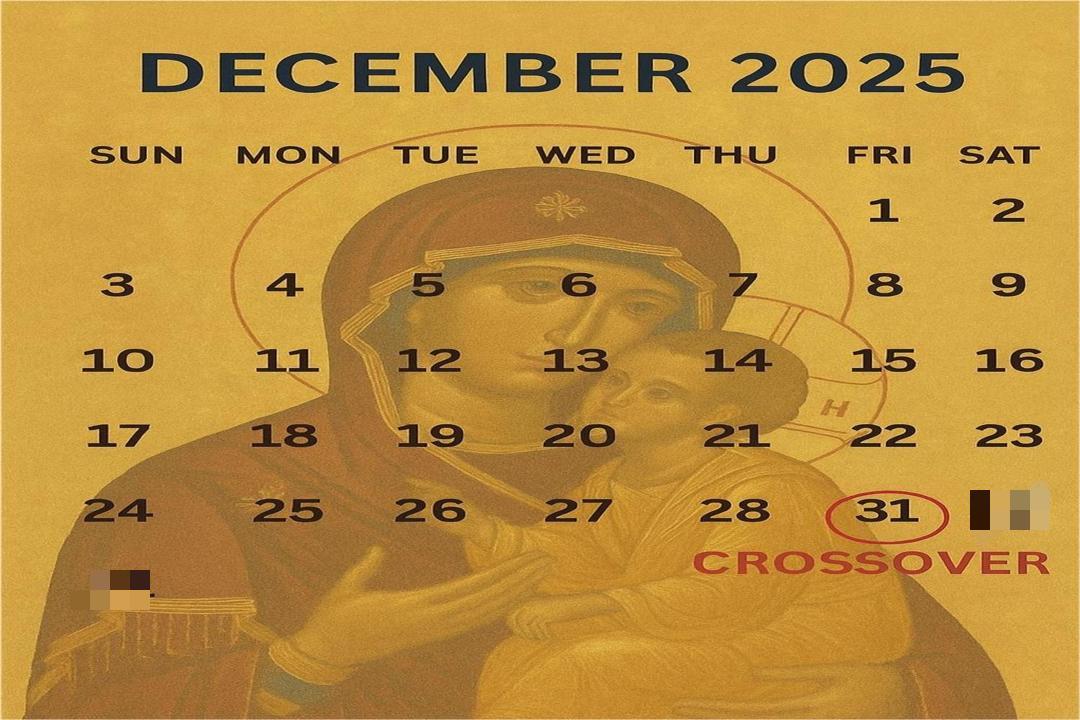
Reasonably, based on the longstanding principle of non mutatione nisi necessitate— that established practices should not be altered without necessity— some may presently question a ‘wholesale’ authorization of anticipatory Masses in certain ecclesiastical jurisdictions like Ghana. Nevertheless, anticipating the Solemnity of Mary, Mother of God, remains a viable pastoral option for addressing the unique challenges posed by the widespread ‘31st December Crossover’ culture. Celebrating the Solemnity on the eve of the New Year of the Gregorian Calendar may constitute the most practicable means of facilitating participation while avoiding any (in)direct impediment to the faithful’s fulfillment of their religious obligation. Such an approach respects both the spiritual aspirations of the faithful and the integrity of the Church’s liturgical discipline, harmonizing pastoral sensitivity with canonical responsibility.
After assessing pastoral realities through a structured discernment process at the level of the local ordinary or episcopal conference, specific published times may be provided for the commencement and conclusion of an anticipatory Mass for the Solemnity of Mary, Mother of God, and these times must be fairly honored on the eve of the Gregorian calendar’s New Year. As some beautifully practice already, before or after the Mass, there may be devotional practices such as praise and worship, the rosary, vocal prayer, or Eucharistic adoration of the Blessed Sacrament. In such cases, the faithful who may not wish or be able to stay for an extended period may attend the Mass specifically, whereas those who are willing— or inclined to ‘test all spirits’ — can benefit more fully from the other treasures of the Church’s life. Apart from the anticipatory Mass, for those who can attend, nothing may prevent a parish from celebrating additional Masses on the proper day of the Solemnity, 1st January. However, the effectiveness of this may largely depend on accompanied vigorous catechesis rather than mere scheduling.
That being said, mention must be made of instances in which such solemnities fall on a Sunday, in which case the faithful face two obligations: the Lord’s Day and the Solemnity of Mary, Mother of God. First, it must be established that there is no vigil for ordinary Sunday Masses. Regarding masses for ordinary Sundays, those commonly referred to as ‘vigil Masses’ are properly termed ‘anticipatory Masses,’ since in the Roman Missal presently in force, there are only seven Solemnities (Easter Sunday, Pentecost, the Nativity of St. John the Baptist on 24 June, Saints Peter and Paul on 29th June, the Assumption of the Blessed Virgin Mary on 15th August, the Nativity of the Lord on 25th December, and the Epiphany of the Lord which falls on 6th January or on the Sunday between 2nd and 8th January) that possess proper vigils to be used on the evening of the preceding day when an evening Mass is celebrated (Universal Norms on the Liturgical Year and the Calendar, 11).
A liturgical vigil (not necessarily a Mass) is typically a preparatory celebration for major feasts and employs a formulary (collect, antiphons, preface, etc.) different from that of the solemnity it anticipates. An anticipatory Mass, in contrast, is the Eucharistic celebration of a solemnity or a Sunday on the evening preceding the established day, using the same formulary as the proper day. This arrangement accords with the Catholic Church’s celebration of First Vespers for Sundays and Solemnities, because “the liturgical day runs from midnight to midnight. However, the celebration of Sunday and of Solemnities begins already on the evening of the previous day” (Ibid, 3)
Inspired by the Judeo-Christian tradition of beginning holy days at sunset, both vigil and anticipatory celebrations reflect the Church’s practice of counting solemnities—among the most important days of the liturgical year—as beginning with First Vespers (Evening Prayer I) on the preceding day (Ibid, 11). With vigils and anticipatory Masses, however, the norm is that they “may not begin before four o’clock in the afternoon, on holy days of obligation still observed” (Pius XII, Christus Dominus, Rule VI). Accordingly, “a person who assists at a Mass celebrated anywhere in a Catholic rite either on the feast day itself or in the evening of the preceding day satisfies the obligation of participating in the Mass” (CIC 1248 §1).
In 2024, for example, the Solemnity of the Immaculate Conception—a first-class feast— fell on the Second Sunday of Advent, which is likewise a first-class feast. Since both feasts carried an obligatory character, the Sunday obligation and the Immaculate Conception obligation had to be fulfilled independently, resulting in a double obligation. To accommodate the pastoral and spiritual needs of the faithful, the USCCB transferred the Immaculate Conception to Monday, retaining its obligatory character, so that one could fulfill both obligations by attending one Mass before 4 p.m. (or after 4 p.m., as locally determined) and another after 4 p.m.
The Mass celebrated before 4 p.m. would satisfy the Sunday obligation, whereas the Mass celebrated after 4 p.m. would satisfy the obligation for the Immaculate Conception (anticipatory Mass). This remains true even if the Mass does not use the formulary of the Immaculate Conception. Various combinations are possible: one could attend a Mass on Sunday before 4 p.m. and another on Monday; attend a Mass on Saturday evening (after 4 p.m.) and another on Monday; anticipate the Sunday Mass on Saturday evening (after 4 p.m.) and also anticipate the Mass of the Solemnity of the Immaculate Conception on Sunday evening (after 4 p.m.); or attend a Mass on Sunday evening (after 4 p.m.) and another on Monday.
To be continued…



Leave a Reply