


By Rev. John William Addai Sarfo
Introduction
The liturgical life of the Church is characterized by both unity and diversity. While the Eucharist is the source and summit of Christian life, various devotional practices such as Eucharistic Adoration and Benediction extend and deepen the faithful’s participation in the Paschal Mystery. One notable feature of these celebrations during the Easter Season is the use of the word Alleluia.
Liturgical Authority for Benediction
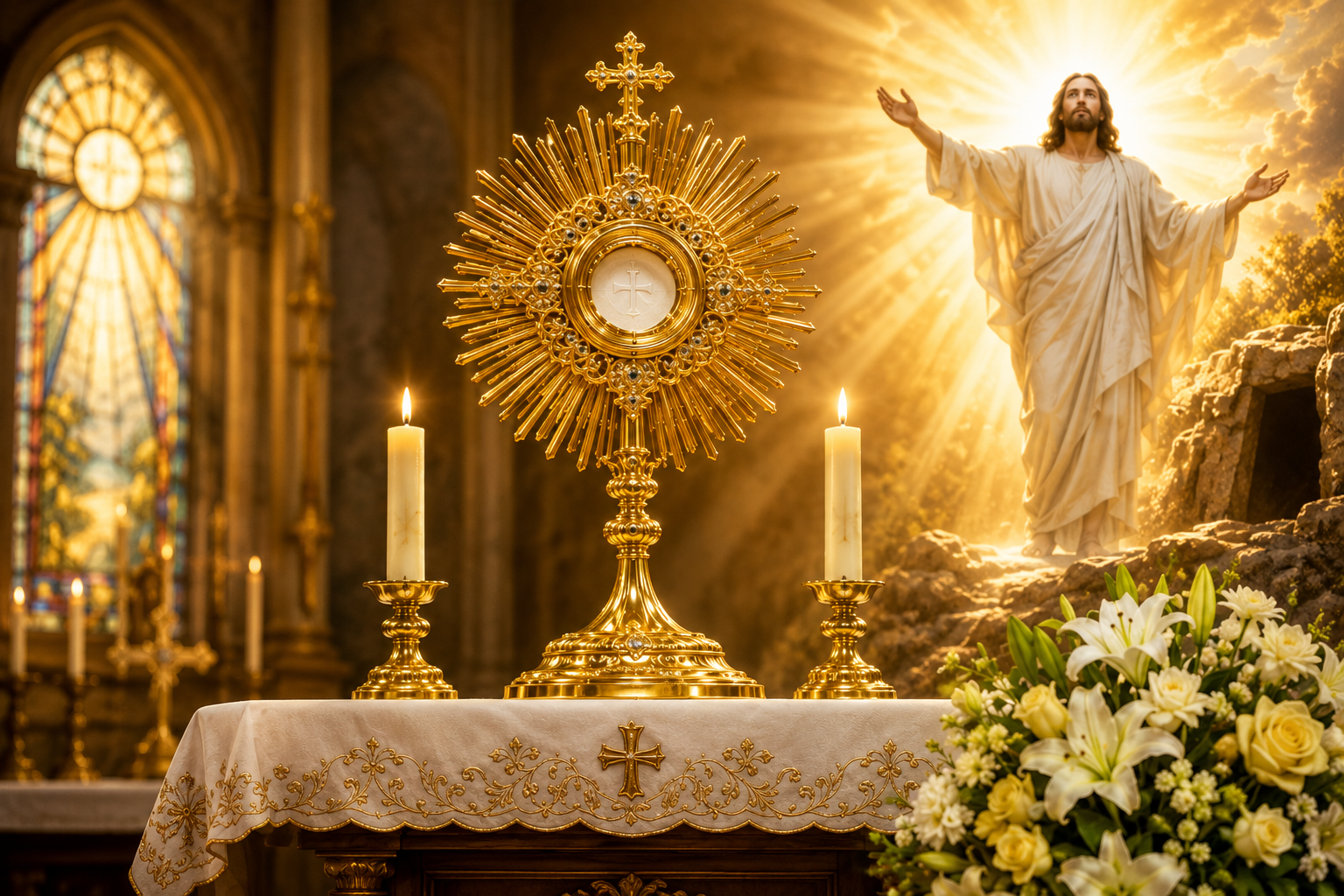
Eucharistic Benediction is not governed by the Roman Missal, but by the Holy Communion and Worship of the Eucharist Outside Mass. This ritual book provides the structure, prayers, and rubrics for Eucharistic worship outside Mass.
The distinction is important: Benediction is not the Eucharistic Sacrifice itself but a devotional extension of it. Therefore, while it shares in the theology of the Eucharist, it follows its own liturgical norms.
The Paschal Character of the Easter Season
The entire Easter Season, from Easter Sunday to Pentecost, is a prolonged celebration of Christ’s Resurrection. During this time, the Church restores the use of the Alleluia, which had been omitted throughout Lent. The General Instruction of the Roman Missal establishes a key principle that Liturgical expressions should correspond to the nature of the celebration and the liturgical season. Thus, the Easter Season is characterized by Joyful acclamations, frequent use of Alleluia and a tone of festivity and triumph. This Paschal character extends not only to the Mass but also to devotional rites such as Benediction.
The Use of Alleluia in Benediction
Although the Holy Communion and Worship of the Eucharist Outside Mass does not explicitly prescribe the addition of Alleluia in every formula, the Church’s liturgical practice guided by the principle of seasonal adaptation permits and encourages its use during Easter time.In practice, this is seen especially in the Divine Praises, where acclamations may be adapted as follows:
• “Blessed be God” → “Blessed be God, alleluia.”
• “Blessed be his Holy Name” → “…alleluia.”
This addition Reflects the joy of the Resurrection, aligns Benediction with the Paschal character of the season and extends the Easter proclamation into devotional life. During the Easter Season in Benediction, It is appropriate though not obligatory to add a single “Alleluia” to acclamations such as the Divine Praises to maintain a joyful and festive tone of the season.
Conclusion
The use of Alleluia during Eucharistic Benediction in the Easter Season is a meaningful and theologically grounded practice. Rooted in the Holy Communion and Worship of the Eucharist Outside Mass and guided by the principles of the General Instruction of the Roman Missal, it reflects the Church’s celebration of the Resurrection. It therefore not a strict obligation to say “Alleluia” during Benediction even in Easter Time but it is strongly fitting and encouraged.



Leave a Reply