

PART II a continuation of the article
The Triple Sign of the Cross
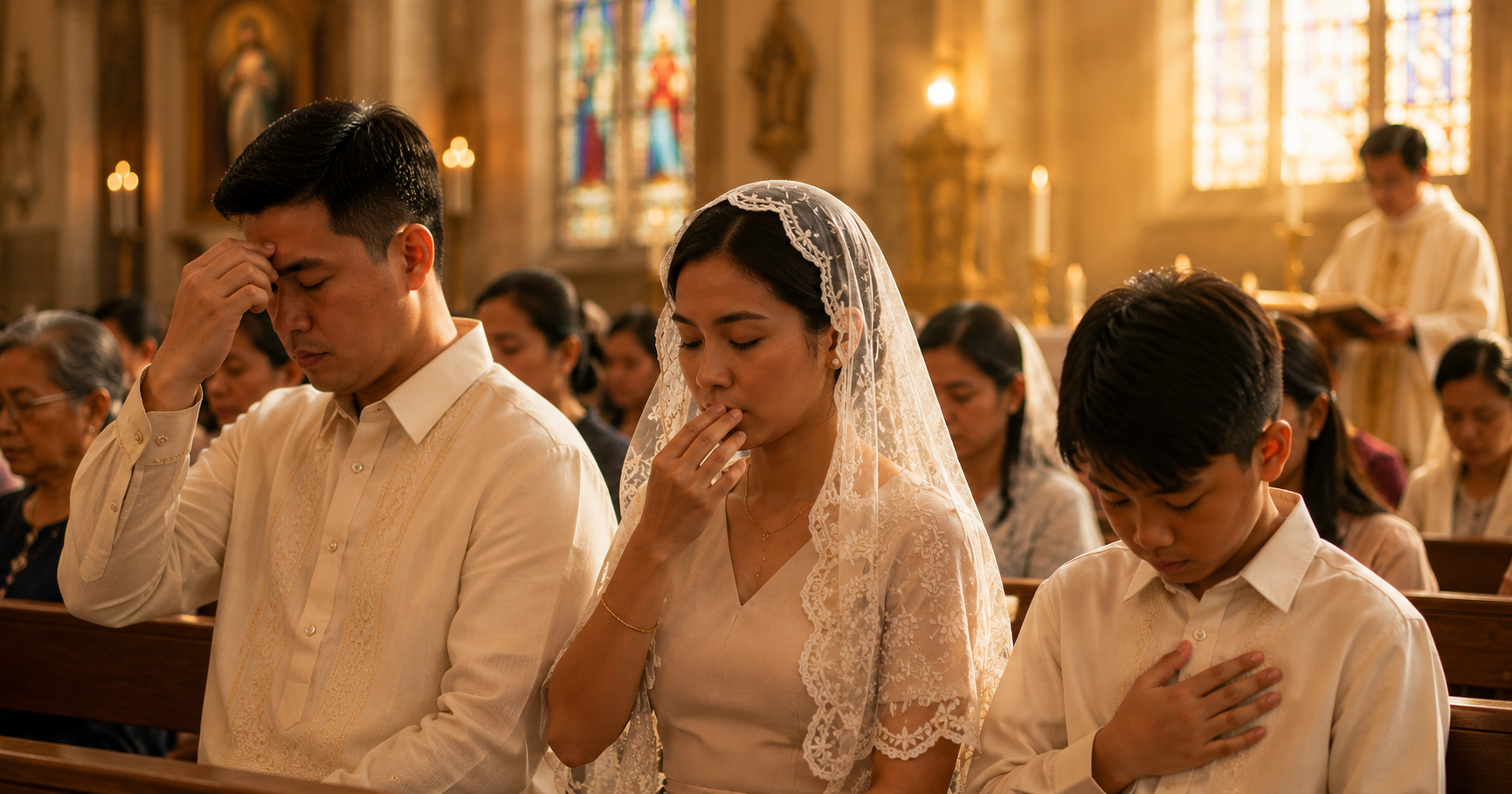
Before the Gospel is proclaimed, Catholics trace small signs of the Cross on the forehead, lips, and heart. This ancient gesture expresses the desire that the Word of God may transform the entire person mind, speech, and heart
Spiritual Meaning of the Triple Sign of the Cross
The signs on the forehead, lips, and heart express a complete dedication of the Christian person to the Gospel message. The gesture means: May the Word of God be in my mind, on my lips, and in my heart. It is therefore a prayer that the Gospel may shape thoughts, speech, and actions. The gestures remind Christians that faith must influence the whole human person. One must think according to the Gospel, speak according to the Gospel, and live according to the Gospel.
Saint Cyril of Jerusalem frequently taught about the power of the sign of the cross, encouraging Christians to mark themselves constantly with faith because the cross is the sign of salvation and discipleship.
Theologically, the triple sign of the cross signifies: Openness to divine truth, Profession of faith, and interior transformation through the Gospel. It also reminds believers that discipleship involves both hearing and living the Word.
The Sign of the Cross on the Forehead
The cross traced on the forehead symbolizes the mind and thoughts of the believer. By making this sign, Catholics pray that the Word of God may remain in their minds and guide their understanding, decisions, and way of thinking. The forehead represents wisdom, knowledge, and remembrance. Christians ask God to open their minds so that they may understand the Scriptures properly and live according to divine truth.
This gesture is deeply rooted in Sacred Scripture. In the Gospel according to Saint Luke, Jesus opened the minds of His disciples to understand the Scriptures: “Then he opened their minds to understand the scriptures” (Luke 24:45). In the Book of Deuteronomy, Moses instructed the Israelites:“You shall bind them as a sign upon your hand, and they shall be as frontlets between your eyes” (Deuteronomy 6:8). This passage emphasizes the importance of keeping God’s Word constantly before one’s thoughts and consciousness.
Saint Augustine of Hippo also taught that the human mind must be enlightened by divine grace in order to understand spiritual truth. Thus, the sign on the forehead symbolizes the dedication of the intellect to God.
The Sign of the Cross on the Lips
The cross traced on the lips signifies the believer’s desire to proclaim the Gospel faithfully and speak words that glorify God. Catholics pray that their speech may reflect the truth and goodness of Christ. The lips are instruments of communication. Through this gesture, Christians ask for the grace to profess their faith courageously and avoid sinful speech such as lies, insults, gossip, or blasphemy.
The Bible repeatedly emphasizes the importance of holy speech. The Psalmist prays: “O Lord, open thou my lips, and my mouth shall show forth thy praise” (Psalm 51:15).This verse beautifully expresses the meaning of the sign on the lips: the believer asks God to help him proclaim praise and truth. Likewise, Saint Paul the Apostle teaches: “For man believes with his heart and so is justified, and he confesses with his lips and so is saved” (Romans 10:10). This passage shows that faith must not remain hidden within the heart but should also be proclaimed openly.
Saint John Chrysostom encouraged Christians to use their tongues not for sinful speech but for proclaiming the glory of God and encouraging others in holiness.
The Sign of the Cross on the Heart
The cross traced on the chest or heart signifies the desire that the Gospel may dwell deeply within the believer’s heart and transform the whole person. In biblical language, the heart represents the center of the human person the place of thoughts, desires, emotions, conscience, and decisions. By making the sign on the heart, Catholics ask God to make His Word take root within them so that they may live according to the teachings of Christ.
The Psalmist in Psalm 119:11 shows that the Word of God should not remain merely external but must dwell within the believer’s inner life. Similarly, the Blessed Virgin Mary is presented as the perfect example of one who treasured God’s Word in her heart (Luke 2:19). This verse reveals the attitude of meditation and openness that Christians should have toward the Gospel.
Conclusion
In Catholic theology, worship involves the whole human person body, soul, intellect, and spirit. Consequently, the gestures before the Gospel reveal the unity between external action and interior faith. Through them, the Church expresses her belief that the Gospel is the living Word of God that continues to guide, sanctify, and nourish the People of God.
By Lukeman Antwi Agyei




Leave a Reply