

Introduction
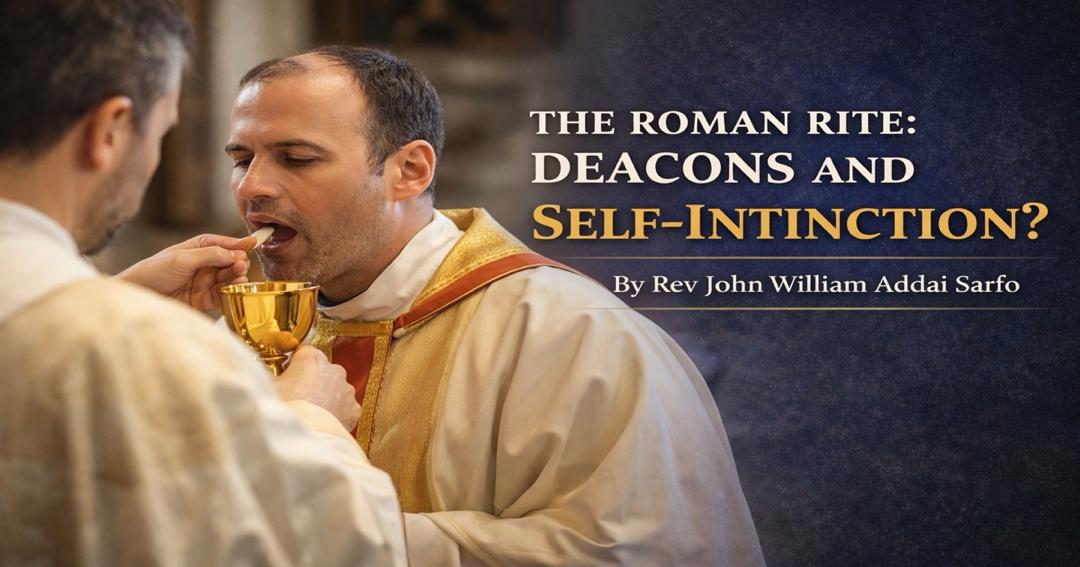
The distribution and reception of Holy Communion in the Roman Rite are governed by precise liturgical norms to safeguard reverence for the Eucharist and the proper distinction of ministerial roles. One such regulated practice is intinction. A pertinent liturgical question arises: may a deacon perform self-intinction when receiving Holy Communion?
The Proper Manner of Communion by Intinction
The Church does not only prohibits self-intinction but also positively prescribes the correct manner of administering Communion in this form. The proper manner of intinction can be seen in GIRM 287. According to GIRM no. 287:
- The priest takes the consecrated host,
- intincts it into the chalice, and
- places it on the tongue of the communicant.
This structured procedure makes clear that intinction is not an individual or self-directed act, but rather a ministerial action carried out by the ordained priest for the communicant.
Redemptionis Sacramentum no. 100 states that “in the course of the Eucharist banquet, lay members of Christ faithful,too, are admitted to communion under both kinds.” The Deacon also can receive communion under both kinds as noted in GIRM 182. If these are true, can we say that deacons and lay faithful can perform self-intinction? The answer is NO. This leads us into looking at the norm against self-intinction by deacons.
The Norm Against Self-Intinction
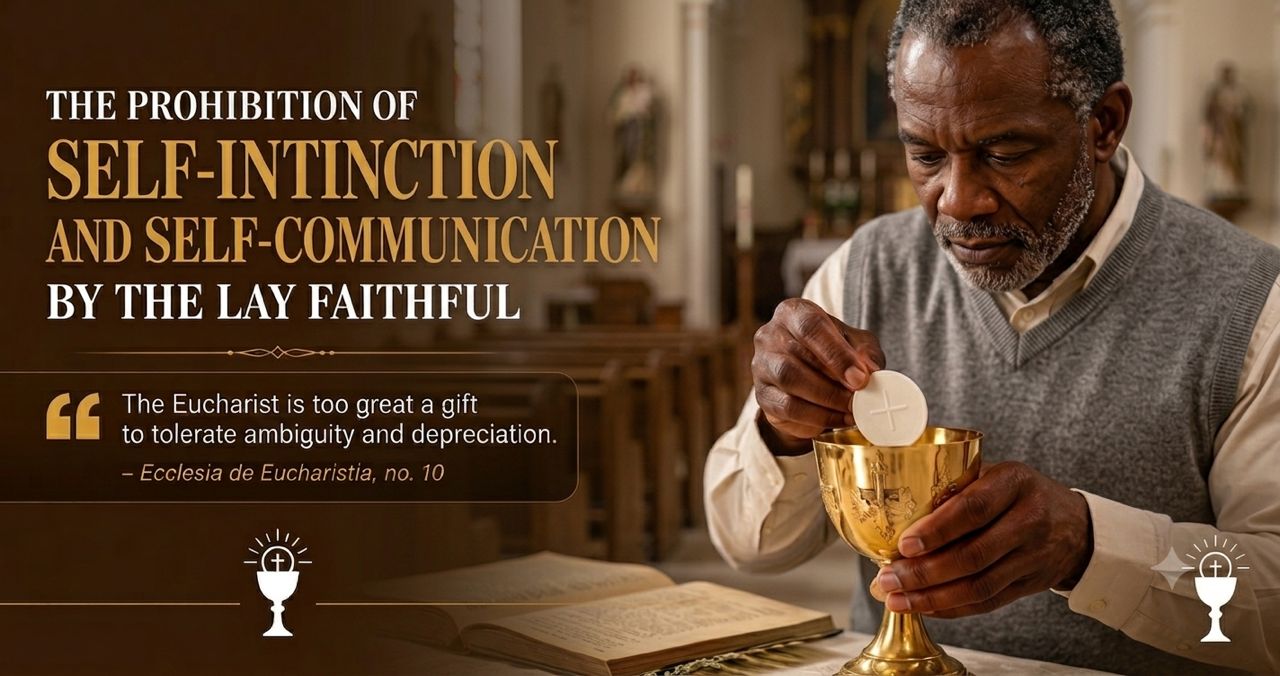
Redemptionis Sacramentum 104 states: “The communicant is not permitted to take the consecrated host and dip it into the chalice himself.” This norm is unequivocal and universal in scope. It applies to all those who receive communion from the celebrant (non-concelebrants, deacons, and the lay faithful).
Further clarification is provided in GIRM 182 which specifies that deacons are admitted to communion under both kinds also states emphatically that, “ after the priest’s communion, the deacon receives communion under both kinds from the priest himself.”
Additional support is found in the General Instruction of the Roman Missal, particularly no. 244, which indicates that the deacon receives the Body and Blood of the Lord from the principal celebrant after the concelebrating priests have communicated. This further confirms that even ordained ministers such as deacons do not self-administer Communion by intinction.
These documents bring to mind the idea that the deacon occupies a distinct yet complementary role thus, as a minister and a communicant.
The Deacon as Minister and Communicant
The deacon occupies a distinct yet complementary role within the Eucharistic celebration. On the one hand, he is an ordinary minister of Holy Communion (CIC 910 §1). On the other hand, he is also a communicant, thus, he receives from the priest by intinction, or receives separately under each species.
Conclusion
In light of the authoritative norms contained in the churches documents quoted, the Church’s position is clear: Self-intinction is forbidden to all communicants, including both the lay faithful and deacons. Holy Communion by intinction must always be administered by the priest, not performed by the communicant.
By Rev. John William Addai Sarfo


Leave a Reply